
Conroe · Houston · Fulshear · Katy · Kingwood  |  Telehealth in TX, NC & SC — Care From Home Call or text 713-BOTOX-ME (713-268-6963)

Home / Laser Rejuvenation / Sciton

Sciton light & laser pathways

Sciton JOULE / Profile

One modular platform. Several distinct treatment families for visible sun damage, redness, texture, scars and deeper skin renewal.

Evidence reviewed July 31, 2026
Setting In-office treatment
Recovery Minimal to several weeks
Pricing Consultation required
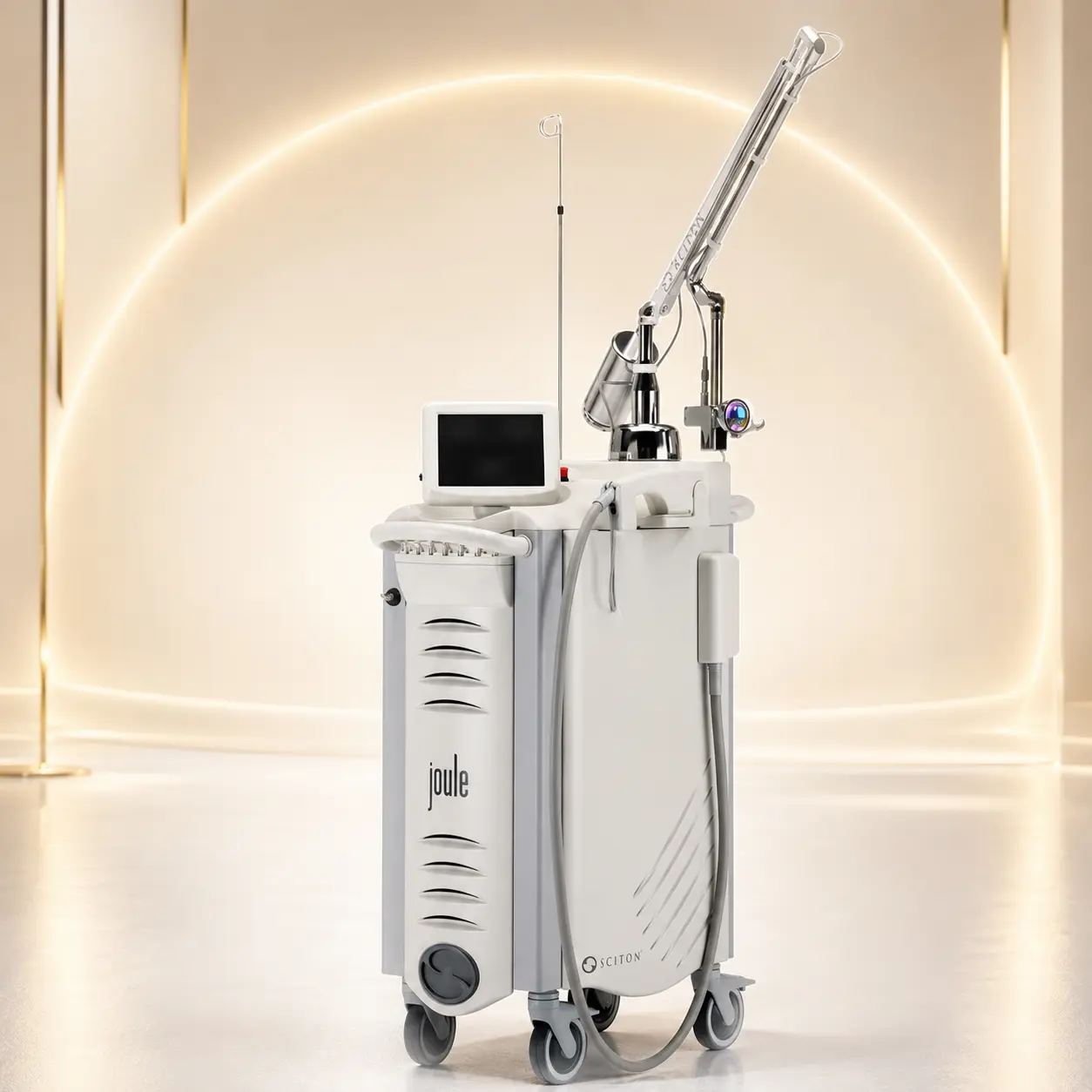
Sciton JOULE laser and broadband light system
Technology selected by target

Not one treatment—a customizable platform

Sciton’s platform can host different modules. BBL uses filtered broadband light to target selected pigment and vascular color. ProFractional and Contour TRL use 2940 nm erbium:YAG energy for fractional or full-field resurfacing. A 1064 nm vascular module may address deeper visible vessels when available.

Your consultation must confirm the exact handpiece and module available at Identity Aesthetics. A platform name alone does not establish that every Sciton treatment is appropriate—or installed.
Primary treatment families

Choose the pathway that matches the problem

BBL and erbium resurfacing are not interchangeable. The right path depends on whether the main target is color, vascularity or structure.

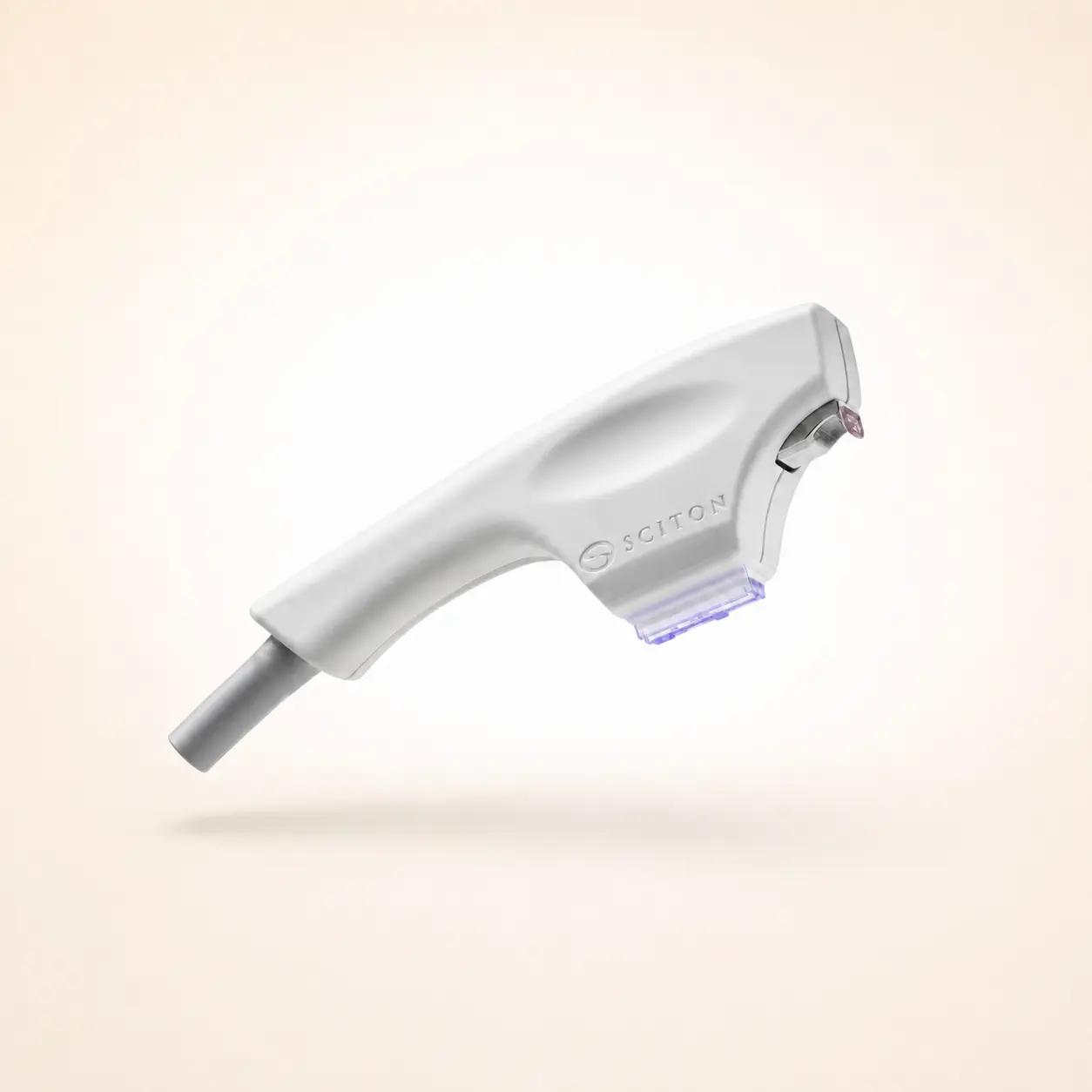
Sciton BBL BroadBand Light handpiece
Color correction

BBL® BroadBand Light

Interchangeable filters narrow the emitted light to selected wavelength bands. Depending on the filter, settings and diagnosis, BBL may target brown sun damage, freckles, age spots, diffuse redness, visible capillaries, rosacea-like redness or unwanted hair.

Pigmented lesions should be diagnosed before treatment. BBL does not replace a skin-cancer examination.

Sciton JOULE erbium laser platform
Texture remodeling

ProFractional® & Contour TRL

ProFractional creates microscopic ablation channels while leaving surrounding skin intact. Contour TRL provides tunable full-field resurfacing. These pathways may improve wrinkles, rough texture, acne or surgical scars and selected stretch-mark appearance, with recovery increasing as treatment depth increases.

Choose by concern

Your most useful starting point

Brown spots & sun damage

Often LaseMD or filter-selected BBL, depending on depth, skin type and diagnosis.

Redness & visible vessels

Usually a Sciton light or vascular pathway—not LaseMD—after identifying the vascular target.

Texture & fine lines

LaseMD for gentler renewal; ProFractional or deeper erbium resurfacing when more remodeling and downtime are acceptable.

Acne or surgical scars

Sciton fractional erbium resurfacing may be considered. Scar type, color and depth determine the plan.

Stretch-mark appearance

Fractional resurfacing may soften texture or contrast. Complete removal cannot be promised and a series is common.

Skin tightening

Collagen remodeling may improve the appearance of mild laxity, but laser is not equivalent to surgical lifting.

Important: BBL is BroadBand Light, not a laser. “Laser rejuvenation” is used here as a consumer-friendly category, while your treatment plan identifies the actual technology.
Sciton selector

How the modalities differ

Decision point BBL ProFractional Contour TRL
Primary role Brown/red color, sun damage, selected vessels Fractional texture and scar remodeling Full-field resurfacing for more advanced texture and wrinkles
Technology Filter-selected broadband light Fractional 2940 nm Er:YAG laser Tunable 2940 nm Er:YAG laser
Typical recovery Often little downtime; pigment can darken before clearing Commonly several days; intensity changes recovery Often 2–4 weeks for deeper treatment
When change appears Over the following days to weeks Initial change in days; collagen remodeling continues for months Visible change after healing; improvement may continue for months
Common course Frequently a series Often 1–4 sessions Often 1–3 treatments, depending on depth
Filter-guided BBL

Why filters matter for sun damage and redness

BBL uses a range of wavelengths rather than one laser wavelength. The provider selects a filter and pulse settings designed around the intended chromophore—melanin for brown lesions or hemoglobin for vascular redness—then adjusts for skin type and target depth. This flexibility is why BBL can be compelling for mixed visible photoaging, but it also makes operator judgment essential.

Brown pigment

Sun spots, freckles and age-related benign pigment may temporarily darken before gradually flaking or fading.

Redness & vessels

Selected filters can target diffuse redness, small visible vessels and cherry angiomas when clinically appropriate.

Combination plans

BBL may be paired or staged with resurfacing when both color and texture are priorities. Combining treatments can also increase recovery and risk.

Special concern pathways

Scars, stretch marks, tightening and toenails

These concerns require more diagnostic precision than a standard “facial rejuvenation” visit. Scar type, stretch-mark age and color, degree of laxity and the cause of a nail change all affect whether energy treatment is reasonable.

  • Scars: ProFractional or deeper erbium resurfacing may soften texture; complete erasure is not realistic.
  • Stretch marks: Fractional resurfacing may reduce visible texture or contrast, often over a series.
  • Mild laxity: Collagen remodeling may improve appearance, but it cannot reproduce a surgical lift.
  • Toenail fungus: Nail changes should be confirmed as fungal before treatment. A 1064 nm laser protocol may be discussed only when the appropriate module is available; results vary, recurrence is possible and standard antifungal care may still be needed.
The short answer

What is the Sciton JOULE / Profile platform?

It is a modular medical laser and light platform. The attached treatment module—not the console name—determines the energy delivered, the target and the recovery. Identity Aesthetics uses this flexibility to build concern-specific plans rather than treating every patient with the same setting.

Concerns it may address

  • Sun damage, freckles, age spots and uneven-looking tone
  • Diffuse redness, selected visible vessels and vascular discoloration
  • Fine lines, wrinkles and rough texture
  • Acne scars, surgical scars and selected stretch-mark appearance
Candidacy

Who may—or may not—be a candidate

Who may be considered

Candidates are selected first by which pathway suits the problem, then by whether they suit that pathway. BBL is filter-selected broadband light and usually asks little of your calendar; ProFractional and Contour TRL are 2940 nm Er:YAG resurfacing, and deeper full-field treatment commonly means two to four weeks of visible healing. A good candidate has been told which of those they are having, and has the recovery time it actually requires.

When treatment may not be appropriate

Active infection, open wounds, recent tanning, photosensitizing drugs, pregnancy, uncontrolled disease, certain scar histories or an undiagnosed lesion may postpone or change treatment.

At a glance

Treatment facts

These are practical planning ranges, not promises. Your consultation determines the exact plan.

Treatment time
Usually 20–60 minutes
Comfort / anesthesia
Ranges from warmth to stronger prickling; numbing depends on device
Typical downtime
None to more than a week, depending on intensity
When changes may appear
Days to months, depending on pigment turnover and collagen remodeling
How long results may last
Variable; aging and sun exposure continue
Treatments commonly considered
Often a series; deeper procedures may be less frequent
Your visit

What happens during treatment

Choose the pathway

The provider decides between light and laser before deciding on settings. Colour and sun damage point toward BBL; texture, scarring and wrinkles point toward ProFractional or Contour TRL, and some plans combine them.

Treat at agreed settings

Eye protection is worn. Settings are chosen for your skin type and the concern, and the endpoint the provider is watching for is explained to you beforehand rather than described afterwards.

Heal on the pathway’s timeline

After BBL, pigment commonly darkens before it clears. After ablative resurfacing the skin heals as a wound, with strict sun avoidance and written aftercare. You are given the recovery your pathway actually has, not an average of all of them.

Informed choice

Important risks, limitations and alternatives

Risks & limitations

Temporary redness, swelling, dryness or pigment darkening can occur. Burns, blistering, prolonged pigment change, infection and scarring are uncommon but important risks. Results vary with device, settings, skin type, concern and aftercare; treatment does not stop future aging or sun damage. Two pathway-specific points are worth stating plainly. After BBL, treated brown pigment typically darkens and flakes before it clears, which is expected rather than a complication. After ablative Er:YAG resurfacing the skin surface is removed and heals as a wound, so infection and reactivation of cold sores are real risks, and deeper full-field treatment commonly means two to four weeks before you look like yourself again.

Alternatives to discuss

  • Medical-grade skincare and daily sun protection
  • Chemical peels or Glo2Facial
  • Microneedling or radiofrequency for selected texture goals
  • Surgical options for laxity that laser cannot meaningfully correct
Clinical judgment

Why provider experience matters

Different pigments and scars do not respond alike. Provider experience reduces the chance of treating the wrong diagnosis, using excessive energy or overlooking skin-cancer warning signs.

Identity Aesthetics approach

  • Diagnosis and anatomy before a product or device
  • Conservative planning with candid limitations
  • Licensed-provider supervision and complication readiness
  • In-office and telehealth boundaries stated clearly
Access & cost

In-office versus telehealth

Laser consultation and treatment are in-office only.

Pricing: Consultation required. Price depends on device, area, intensity and series.

Common questions

Sciton, BBL & resurfacing FAQ

Is BBL a laser?
No. BBL is filtered broadband light. Sciton also offers true laser modules, including erbium:YAG resurfacing and 1064 nm vascular technology.
Will one treatment fix all sun damage?
No guarantee can be made. Some people notice visible change after an early treatment, while others need a series and ongoing sun protection. New sun damage can still develop.
Can Sciton remove stretch marks or scars?
Fractional or deeper erbium resurfacing may soften visible texture and contrast, but complete removal is not realistic. Scar type, skin type and healing history affect candidacy.
Does laser cure toenail fungus?
A nail diagnosis comes first because trauma, psoriasis and other conditions can resemble fungus. When an appropriate 1064 nm protocol is available, it may be discussed as one option, but clearance of the nail and prevention of recurrence are not guaranteed.
Can I tan before BBL or resurfacing?
Recent tanning may increase burn and pigment risk. Follow the practice’s sun-avoidance instructions and disclose natural, spray and self-tanning exposure.

Sources & medical review

  1. Sciton — BBL treatment overview
  2. Sciton — ProFractional technology and indications
  3. Sciton — Contour TRL deep resurfacing
  4. Sciton — 1064 nm vascular technology
  5. FDA — Laser Products and Instruments

Medical-content evidence review: July 31, 2026. Manufacturer pages describe the broader Sciton product family; actual modules and treatment availability at Identity Aesthetics must be confirmed in consultation. Content is educational, does not promise outcomes and has not been individualized to your medical history.

Your next step

Choose the right Sciton pathway

Bring your goals, medication list, recent sun exposure and treatment history. We will determine whether BBL, fractional resurfacing, deeper resurfacing—or a different option—fits your skin.

Continue Exploring

Move from information to the right next step.

Explore connected treatment guidance, meet the clinical team or begin a personalized consultation.

Prepared byIdentity Aesthetics Clinical Editorial Team

Patient education developed from primary regulatory, labeling and professional sources.

Medically reviewed byDallas Alvey, MD, DDS

Physician review of device selection, candidacy and safety information.